SHOT LENGTH
Shots got shorter
Across 210 popular English-language films, the average shot fell from 10.5 seconds in 1930 to 1955 to 4.3 seconds in 1990 to 2015.
Pick an era doodleclips
WHAT THE FILM RESEARCH SHOWS
A film is a chain of short clips.
Editors decide how long each shot lasts and what comes next. Researchers who measured a century of popular movies found shots getting shorter, pace following the story, and a cut that can change how a face reads.
CUT, CUT, CUT a century of shorter shots
Pick an eraTHE SHORT ANSWER
Three findings from film researchers.
Each one changes how you watch.
SHOT LENGTH
Across 210 popular English-language films, the average shot fell from 10.5 seconds in 1930 to 1955 to 4.3 seconds in 1990 to 2015.
Pick an eraPACE
Within a film, shots get shorter through the setup and again in the first part of the climax, then lengthen as the story settles. More cuts mean more chances to steer the eyes.
See the numbersKULESHOV
Put a neutral face next to a happy or frightening scene and viewers read the face differently. A 2016 replication found some sort of Kuleshov effect does exist.
The famous test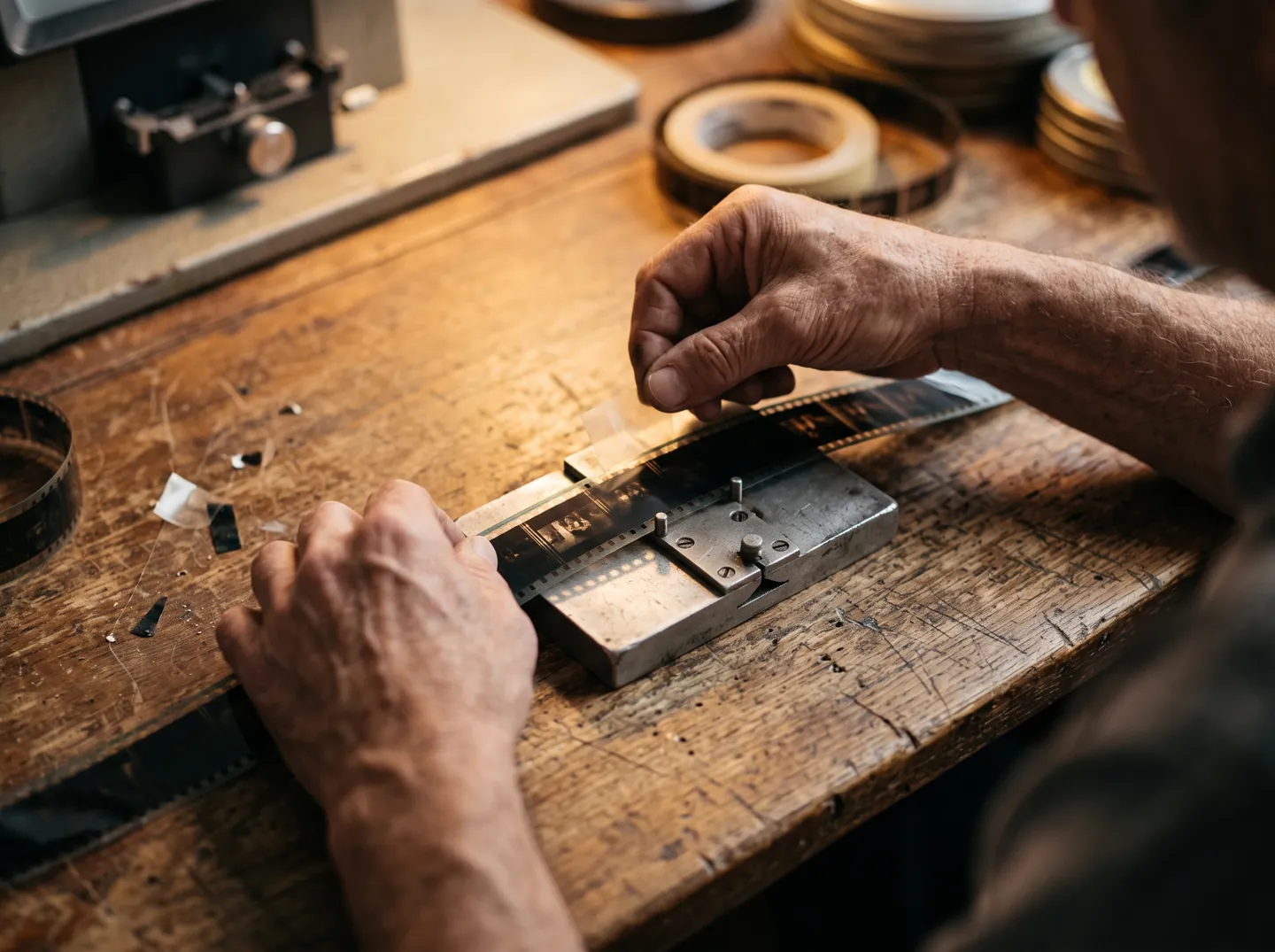
FOUR THINGS TO TRY
You can see these patterns with nothing but a timer. Pick a film you know well and watch it as an editor would.
Tap each time the picture changes shot. Sixty divided by your count gives the average shot length in seconds.
Try the same minute-count on a film from the 1940s and one from the 2010s and see how the numbers compare with the research.
Research found shots shorten in the first part of the climax and lengthen again at the end. Count during the big finale, then the closing scene.
Notice how a close-up of an actor reads differently depending on the shot before it. That is the Kuleshov idea at work.
TWO NUMBERS WORTH KNOWING
One figure on how fast films cut today,
one on how stable their structure has been.
4.3seconds
Average shot, popular films 1990 to 2015
Down from 10.5 seconds in films from 1930 to 1955. The study measured shot durations across 210 popular English-language movies released from 1915 to 2015.
SHOT LENGTH · CUTTING 2016
≈ 90%
Films with four acts, 1930s onwards
In Kristin Thompson's analysis of 100 films, four-act films were dominant from the 1930s on, about 90% of the time: setup, complication, development and climax.
STORY SHAPE · THOMPSON VIA CUTTING
An earlier study of 150 Hollywood films from 1935 to 2005 found neighbouring shots became more alike in length over 70 years, a pattern the authors suggest may help hold viewers' attention.
A CENTURY OF CUTS
Pick an era of popular English-language film to see the average length of a shot in James Cutting's sample. The bar shows how long shots were.
Averages across 30 silent films and 60 films in each sound-era group, ten of the most popular films from each sampled year.
THE FAMOUS TEST
Film legend says the Soviet filmmaker Lev Kuleshov joined one actor's neutral face to scenes of happiness, sadness and hunger, and viewers saw a different emotion each time. The original footage is lost, and replications have given mixed results.
A 2016 study with 36 viewers found the effect does exist in some form, and a 2024 study using purpose-shot film sequences found fearful or happy scenes changed how 59 viewers rated neutral faces.
Questions
Yes, on average. In one study of 210 popular films, the average shot was 10.5 seconds for 1930 to 1955 and 4.3 seconds for 1990 to 2015.
Not in shot length. The silent films in the sample, from 1915 to 1925, averaged 7.5 seconds a shot, shorter than the early sound films that followed.
Researcher James Cutting suggests more cuts mean more eye movements that drive attention, and that more motion also captures attention, which may increase engagement.
The idea that a neutral face seems to show different emotions depending on the shot cut next to it. A 2016 replication found some form of it exists.
No. Results vary: a 2017 study found a clear effect for fear but not for happiness, and a 2026 study found context changed how pleasant a face seemed but not which emotion people named.
Updated
ABOUT THIS NAME
doodleclips.com is part of the DoodleSale portfolio. It isn't in an auction right now, but you can ask about leasing it.